
MY WISHLIST
MY WISHLIST

New York City is the world’s most culturally complex fashion incubator, where the role of NYC culture in fashion selection operates as a direct, measurable force on what people wear, buy, and reject. No other city translates immigration waves, borough subcultures, and global diaspora networks into retail trends at the same speed or scale. The Garment District, New York Fashion Week, and designers like Telfar Clemens and Thom Browne are not just commercial fixtures. They are cultural pressure points that convert lived experience into garments. Understanding how this works gives you a sharper eye for what NYC style actually means.
New York City’s cultural mosaic is the primary engine behind its fashion output. Diversity and innovation from successive immigrant generations continuously reshape what the city wears, making NYC a living fashion laboratory rather than a static trend archive. Each wave of newcomers brings textiles, silhouettes, and dress codes that eventually migrate from neighborhood markets to runway collections.
The Lagos-NYC exchange is one of the clearest examples of this dynamic. The NYC diaspora aesthetic has formed a closed-loop exchange with Lagos since 2012, blending hip-hop visual language with Nigerian textile traditions like Ankara prints and Aso-oke weaves. The result is a street style vocabulary that neither city could have produced independently. This kind of peer-to-peer cultural circuit is what separates NYC fashion from cities where influence flows in only one direction.
Cultural festivals and community events accelerate this process further. The West Indian American Day Carnival in Brooklyn, Lunar New Year celebrations in Flushing, and Dominican Day parades along Sixth Avenue each generate distinct visual moments that feed directly into the city’s broader style conversation. Designers and stylists attend these events not as tourists but as researchers.
Pro Tip: If you want to track where NYC fashion is heading next, follow the style accounts of second-generation designers from Brooklyn and Queens. They translate diaspora culture into commercial collections faster than any trend forecasting agency.
Pragmatism is the foundation of NYC style, and this is not a compromise. New Yorkers select clothes for performance under the city’s physical demands: long walks, subway commutes, unpredictable weather, and days that move from a morning meeting to an evening gallery opening without a wardrobe change. This functional constraint produces a fashion sensibility that is both disciplined and creative.
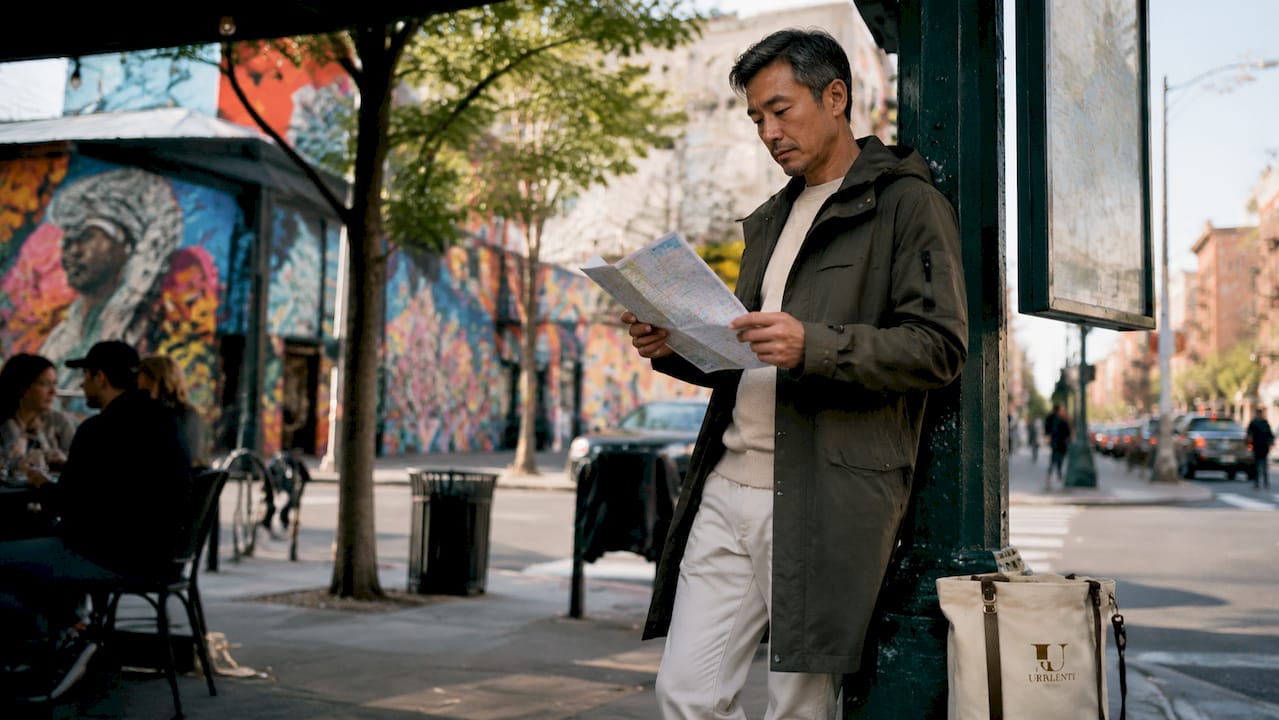
The gym-to-streetwear aesthetic in NYC blurs the line between performance wear and fashion, reflecting a lifestyle that is fast and multifaceted. Brands like Lululemon and Nike are not just activewear labels in New York. They are style anchors that get layered with Saint Laurent jackets or Gucci accessories, creating a hybrid look that is entirely native to urban culture in style.
The blazer occupies a unique psychological position in this system. The blazer functions as identity armor for aspiring professionals and a second skin for the established, bridging office structure with personal expression. No other garment in the NYC wardrobe carries the same dual weight of ambition and comfort.
Here is how practical NYC life translates into specific fashion decisions:
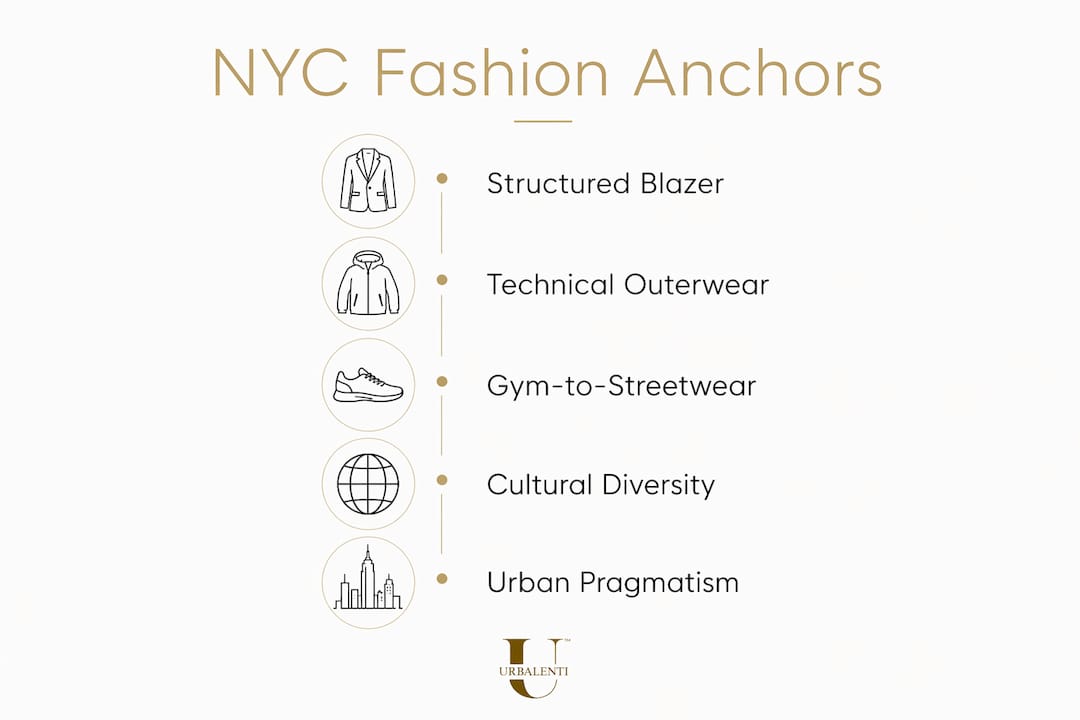
Pro Tip: Build your NYC-inspired wardrobe around three anchor pieces: one structured blazer, one technical outerwear layer, and one pair of shoes you can walk five miles in without thinking about it. Everything else is expression.
The defining shift in New York fashion for 2026 is a move toward emotional safety. Designers now blend digital and cultural heritage motifs to create clothing as personal sanctuary, moving past traditional logos toward meaningful, hand-crafted designs. This is not nostalgia. It is a deliberate rejection of fashion as status performance in favor of fashion as psychological shelter.
This shift connects directly to how NYC’s cultural diversity feeds fashion innovation. When designers are intimately connected to local audiences rather than corporate trend reports, the output reflects genuine cultural experience. Emerging NYC designers in 2026 are drawing from their own family histories, neighborhood aesthetics, and diaspora identities rather than chasing what sold well in Paris or Milan last season.
“Fashion is inseparable from cultural pillars like art and architecture. Brands succeed by embedding culturally rich stories rather than chasing trends.” — Culture Is Not The Backdrop Of Fashion
Several specific trend directions define 2026 in New York:
New York’s position among the four major fashion capitals is distinct because it prioritizes commercial relevance and cultural inclusivity over pure artistry. NYFW is the world’s most commercially influential fashion week, launching more designers and balancing artistry with wearability in a way that Paris and Milan do not consistently attempt.
The table below maps the key differences across the four capitals:
| Fashion capital | Cultural driver | Dominant aesthetic | Commercial focus |
|---|---|---|---|
| New York | Immigrant diversity, urban pragmatism | Wearable, culturally hybrid | Highest. Retail and mass market |
| Paris | Haute couture tradition, French cultural identity | Refined, conceptual, aspirational | High. Luxury and heritage brands |
| Milan | Italian craftsmanship, textile manufacturing | Tailored, material-driven, polished | High. Manufacturing and luxury |
| London | Art school culture, subcultural rebellion | Experimental, avant-garde, eclectic | Moderate. Niche and emerging talent |
The Garment District in Midtown Manhattan remains a physical anchor for this commercial dominance. It houses fabric suppliers, sample makers, and production facilities that allow designers to move from concept to prototype faster than in any other city. This real-time production capacity is a structural advantage that Paris and Milan cannot replicate at the same scale. Brands like Loewe and Patagonia demonstrate that multi-decade cultural relationships with art and architecture produce more durable brand equity than trend cycles, and NYC’s infrastructure supports exactly that kind of long-term cultural investment.
NYC’s greater cultural diversity also feeds fashion innovation in ways that more homogeneous fashion capitals cannot match. When a designer in Brooklyn is simultaneously influenced by Haitian carnival dress, Japanese streetwear from Harajuku, and the visual language of the Bronx hip-hop scene, the output is genuinely original. That combination does not exist anywhere else. You can explore how this plays out in practice through NYC fashion curation as a retail and editorial discipline.
NYC’s cultural diversity, urban pragmatism, and diaspora networks combine to make the city the most commercially and creatively influential force in global fashion selection today.
| Point | Details |
|---|---|
| Cultural diversity drives selection | Immigrant communities and diaspora networks introduce new textiles, motifs, and dress codes that shape NYC retail trends. |
| Pragmatism defines the wardrobe | NYC’s physical demands make durability, layering, and functional footwear non-negotiable style anchors. |
| 2026 trends reflect emotional depth | NYC designers are moving toward handcraft, quiet confidence, and respectful cultural motif use over logo-driven fashion. |
| NYC leads commercially | NYFW and the Garment District give New York a structural advantage in translating culture into commercial product faster than Paris or Milan. |
| Peer-to-peer exchange is the new standard | Authentic cultural influence in NYC fashion now requires collaboration and credit, not extraction. |
The most common mistake fashion enthusiasts make when studying NYC style is treating it as a single aesthetic. It is not. The fashion dialogue in Williamsburg, Jackson Heights, Harlem, and the Financial District are four separate conversations happening simultaneously, and the most interesting designers are the ones who can move between all four without losing their own voice.
What I find genuinely underappreciated is how much the urban fashion trends of NYC are shaped by people who are not in the fashion industry at all. The transit worker layering a vintage Carhartt over a fitted turtleneck, the Flushing market vendor in a perfectly pressed qipao-inspired blouse, the Bedford-Stuyvesant teenager mixing Adidas with tailored trousers. These are the real trend signals, and they appear on the street months before they appear on any runway.
The 2026 shift toward emotional safety in fashion is real, and it is not a marketing concept. It reflects genuine fatigue with clothes as status competition. People want to wear things that feel like themselves, not things that announce a price point. NYC’s cultural depth gives designers the raw material to make that possible in ways that other cities simply cannot match.
My advice: spend less time reading trend reports and more time walking through neighborhoods you do not usually visit. The fashion intelligence you pick up in one afternoon in Sunset Park or Astoria is worth more than a year of runway coverage.
— Admin Urbalenti
The collections at Urbalenti™ NYC are curated specifically to reflect the cultural depth and wearability that define New York style. Every piece is sourced from Italy and authenticated before shipping, so what you receive matches what the city’s most discerning dressers actually wear.
The Max Mara Mxmagenzia Shirt is a direct example of the quiet confidence trend defining NYC in 2026. Clean construction, premium fabric, and zero reliance on logo branding. It works across the city’s many contexts, from a Midtown meeting to a Chelsea gallery opening. For footwear, the Dolce & Gabbana Lolita Sandals deliver the luxury-meets-urban balance that NYC street style demands. Browse the full NYC curated collections to find pieces that reflect the city’s cultural fashion identity.
NYC culture shapes fashion selection by feeding the city’s design ecosystem with input from immigrant communities, diaspora networks, urban pragmatism, and global cultural exchanges. The result is a fashion vocabulary that is simultaneously commercial, wearable, and culturally specific.
NYC’s immigrant and diaspora communities introduce textiles, silhouettes, and dress codes from cities like Lagos, Seoul, and Mexico City, which then migrate into mainstream retail through designers and street style. This closed-loop cultural exchange has intensified since 2012 and now defines much of what NYFW produces.
New York prioritizes wearability, cultural inclusivity, and commercial reach, while Paris focuses on haute couture tradition and Milan on craftsmanship and tailoring. NYFW is the most commercially influential fashion week globally, launching more designers than any other city’s equivalent event.
The dominant 2026 trends in New York center on emotional safety, handcraft details, softened menswear tailoring, and respectful use of cultural motifs. Designers are moving away from logo-driven fashion toward pieces that reflect personal and cultural identity.
New York’s physical demands, including long daily walks, subway commutes, and multi-context days, require clothes that perform as well as they look. This makes durability, functional footwear, and layering systems structural features of NYC style rather than optional considerations.
Leave a comment