
MY WISHLIST
MY WISHLIST

New York fashion curation is the intellectual and artistic practice of selecting and presenting fashion pieces as cultural artifacts, combining narrative, staging, and audience experience to create meaning beyond mere display. The term “fashion curation” borrows from museum practice but now applies equally to retail floors, digital platforms, and runway presentations across New York City. Institutions like NYU’s Steinhardt School, retailers like Bergdorf Goodman, and platforms like Vogue all practice distinct versions of this discipline. What unites them is a shared commitment to narrative, staging, and experience as the core tools of meaning-making in fashion.
Fashion curation is defined as the intellectual and artistic practice of selecting and presenting fashion pieces as cultural artifacts through deliberate narrative construction, spatial staging, and audience experience design. New York occupies a singular position in this practice because the city operates simultaneously as a museum hub, a global retail capital, and a Fashion Week epicenter. That convergence does not exist at the same scale in Paris, Milan, or London.
The standard industry term for this discipline is “fashion curatorship,” and practitioners who specialize in it are called fashion curators or style curators. The phrase “New York fashion curation” describes both the geographic context and the particular blend of commercial ambition and cultural rigor that defines how the city approaches the practice. Understanding this distinction matters because it separates thoughtful editorial selection from simple merchandising or trend forecasting.
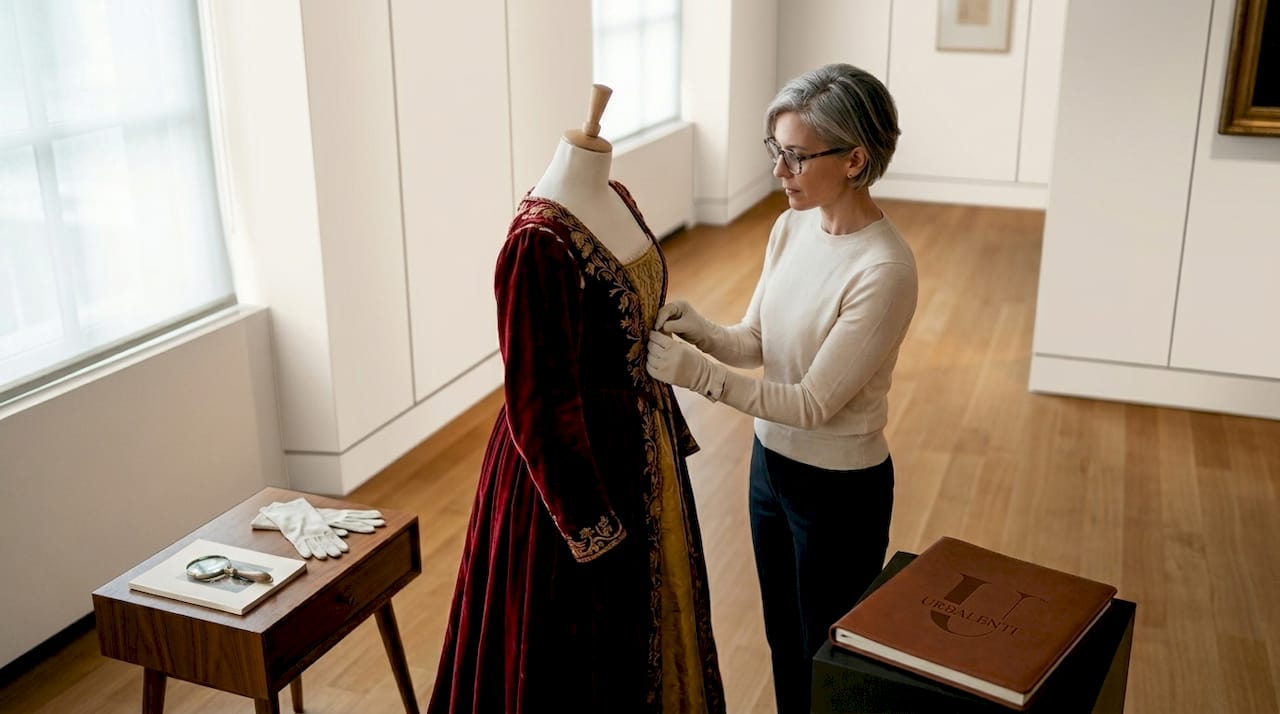
New York style curators work across three distinct environments: institutional exhibitions at museums and academic programs, curated retail spaces on Fifth Avenue and in SoHo, and multi-format Fashion Week programming. Each environment applies the same core principles differently. A curator at the Fashion Institute of Technology (FIT) builds a narrative around garment history and social context. A buyer at Bergdorf Goodman curates a window installation to signal brand identity. A Vogue staffer curates an appointment-based vintage shopping experience to reduce discovery friction for readers. The practice is the same. The stage changes.
New York’s institutional fashion curation draws on scholarly research, ethical reflection, and spatial design in equal measure. FIT and Parsons School of Design both run programs that train curators to treat garments as primary historical documents, not decorative objects. NYU’s Steinhardt School goes further, offering a dedicated Curating Fashion program that explicitly addresses ethical questions as a core component of curatorial training, not an afterthought.
The mechanics of exhibition curation involve decisions that most visitors never consciously register. Mannequin styling, display fixtures, lighting angles, and spatial sequencing all function as narrative devices. Presentation elements materially affect how visitors interpret a garment’s cultural significance, which means a curator’s choices about props and positioning carry the same weight as the selection of the pieces themselves.
Effective exhibition curation in New York typically involves:
Pro Tip: When visiting a fashion exhibition at FIT or the Metropolitan Museum of Art’s Costume Institute, read the curatorial notes before entering the gallery space. The notes reveal the narrative framework the curator built, which transforms what you see from a collection of clothes into a structured argument about culture and history.
Curated group shows in New York also serve as proving grounds for emerging designers. Academic exhibitions at Parsons and FIT regularly introduce new voices by placing their work in dialogue with established historical pieces, a staging choice that functions as both critical endorsement and cultural contextualization.
New York’s curated retail model operates on a principle that most mass-market retailers reject: fewer choices, presented with greater intention, produce better outcomes for both the shopper and the brand. Appointment-only vintage shopping and curated pre-selection workflows, as practiced by Vogue staffers and luxury vintage curators across the city, turn shopping into an immersive experience rather than a search task.
The luxury vintage and resale sector in New York makes this principle most visible. Curators and stylists working in this space narrow inventory through high-effort pre-selection to deliver what amounts to a ready-made wardrobe rather than an unsorted archive. The shopper arrives to find a curated set of options chosen specifically for their taste profile, which removes the cognitive load of sorting through thousands of items and replaces it with the pleasure of discovery within a trusted selection.
The benefits of New York curated luxury fashion in a retail context follow a clear sequence:
Bergdorf Goodman’s window installations represent the most visible form of retail curation in New York. The Chanel window takeover, for example, functions less as advertising and more as a curated retail experience that communicates brand values through spatial storytelling. Shoppers who never enter the store still receive a curated message about what Chanel represents in the current cultural moment.
SoHo and Fifth Avenue function as curated retail districts in their own right. The concentration of designer flagships, multi-brand showrooms, and concept stores in these neighborhoods creates an environment where the curation of the street itself becomes part of the shopping experience. Exploring curated designer edits from this perspective reveals how geography and retail strategy intersect in New York’s fashion ecosystem.
Technology now functions as a curatorial device in New York fashion, not simply a logistical tool. The clearest recent example: designer Kate Barton partnered with IBM and Fiducia AI to deploy multilingual AI agents for virtual try-ons at her New York Fashion Week presentation in 2026. Visitors interacted with IBM watsonx-powered conversational agents that guided them through the collection, answered questions in multiple languages, and enabled virtual try-on experiences. This is curation delivered through code.
The table below compares traditional and technology-enhanced curatorial approaches in New York:
| Dimension | Traditional curation | Technology-enhanced curation |
|---|---|---|
| Narrative delivery | Physical staging, mannequins, printed notes | AI agents, augmented reality overlays, interactive screens |
| Audience reach | Limited to physical attendees | Global, accessible via digital platforms |
| Personalization | Stylist-led, appointment-based | Algorithm-assisted, real-time preference matching |
| Language accessibility | Single language, printed translations | Multilingual AI, real-time translation |
| Engagement depth | Passive observation | Interactive, conversational, participatory |
Augmented reality tools allow curators to layer historical context, designer commentary, and styling suggestions directly onto physical garments, which deepens the narrative without cluttering the physical space. For retail curators, AI-powered recommendation engines analyze browsing and purchase data to pre-select items for individual shoppers, replicating the high-touch pre-selection workflow of luxury vintage curators at scale. Understanding how online fashion catalogs work in 2026 shows how these tools are reshaping the new york luxury fashion curation process from the ground up.
Pro Tip: If you attend a technology-enhanced fashion presentation in New York, engage with the AI or AR components before looking at the garments. The technology is designed to prime your interpretive framework, and experiencing it in sequence produces a richer understanding of the designer’s intent.
Fashion curation raises ethical questions that sit alongside every aesthetic and commercial decision. NYU’s Curating Fashion program treats ethical reflection as a core training component, which signals that the field itself recognizes these questions as professional obligations rather than optional considerations. New York’s position as a global fashion capital amplifies the stakes: curation decisions made here influence how garments, designers, and cultural traditions are perceived worldwide.
The primary ethical considerations in New York fashion curation include:
These considerations directly shape visitor and consumer perception. A curator who presents a garment from a non-Western tradition without proper cultural context risks reducing it to aesthetic spectacle. A retailer who curates a “sustainable” edit without verifiable sourcing data undermines the trust that curation is supposed to build. New York’s most respected curators treat ethical rigor as a competitive advantage, not a constraint. Reviewing luxury fashion collections through this ethical lens reveals how provenance and transparency have become central to how discerning shoppers evaluate curated selections.
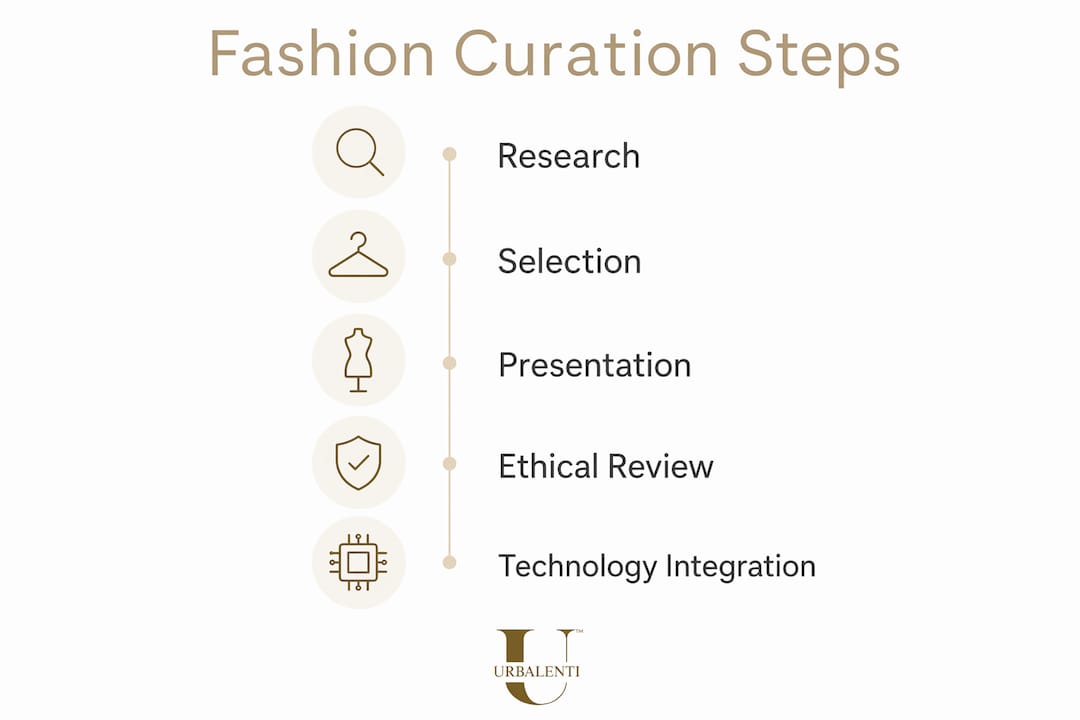
The new york luxury fashion curation best practices that distinguish professional-grade work from casual selection share a common foundation: research precedes every decision, and narrative coherence governs every presentation choice.
For enthusiasts engaging with curated fashion in New York, the practical advice is simpler: treat every curated experience as a structured argument and ask what claim the curator is making. Tracking designer fashion trends through this interpretive frame turns consumption into critical engagement.
New York fashion curation combines scholarly research, spatial staging, ethical reflection, and technology to transform garment selection into cultural storytelling that shapes global fashion perception.
| Point | Details |
|---|---|
| Core definition | Fashion curation is the selection and presentation of garments as cultural artifacts through narrative and staging. |
| NYC’s unique position | New York operates simultaneously as a museum hub, retail capital, and Fashion Week center, creating unmatched curatorial range. |
| Technology as curator | AI agents, virtual try-ons, and AR tools now function as narrative devices, not just logistical additions. |
| Ethics are non-negotiable | Provenance, inclusion, and sustainability are professional obligations in New York fashion curation, not optional considerations. |
| Pre-selection is the skill | High-effort narrowing of inventory, not breadth of selection, defines the best curated retail and exhibition experiences. |
I have watched the conversation around fashion curation shift considerably over the past several years. What used to be discussed primarily in museum studies programs is now a live commercial strategy for luxury retailers, vintage resellers, and Fashion Week presenters alike. That shift is real, and it reflects something important: consumers have stopped trusting volume and started trusting judgment.
What strikes me most about New York’s approach is the refusal to separate art from commerce. The Bergdorf Goodman window and the FIT exhibition operate on the same curatorial logic. Both ask: what story does this piece tell, and how do we stage that story so the audience feels it? The technology layer that Kate Barton and IBM introduced at NYFW 2026 did not change that logic. It extended it into new formats and new languages.
The area I think deserves more attention is sustainability within the curation process itself. Ethical sourcing and cultural provenance get discussed, but the carbon footprint of large-scale fashion exhibitions and the waste generated by seasonal retail resets rarely enter the curatorial conversation. New York’s curators have the platform and the credibility to make that a standard part of the practice. The N4XT Experiences multi-format programming model, which keeps brand narratives active across seasons rather than concentrating everything in a single runway moment, points toward a more sustainable operational model. More curators should study it.
For you as a reader, whether you work in the industry or simply love fashion, the most useful shift is treating every curated experience you encounter as a deliberate argument. Ask who made the selection, what research informed it, and what story it is trying to tell. That question changes how you experience fashion entirely.
— Admin Urbalenti
Urbalenti™ NYC applies the same principles of New York fashion curation to every product selection on the platform. Each piece is chosen for design integrity, brand provenance, and fit within a coherent luxury edit, sourced from Milan and delivered worldwide via DHL Express.
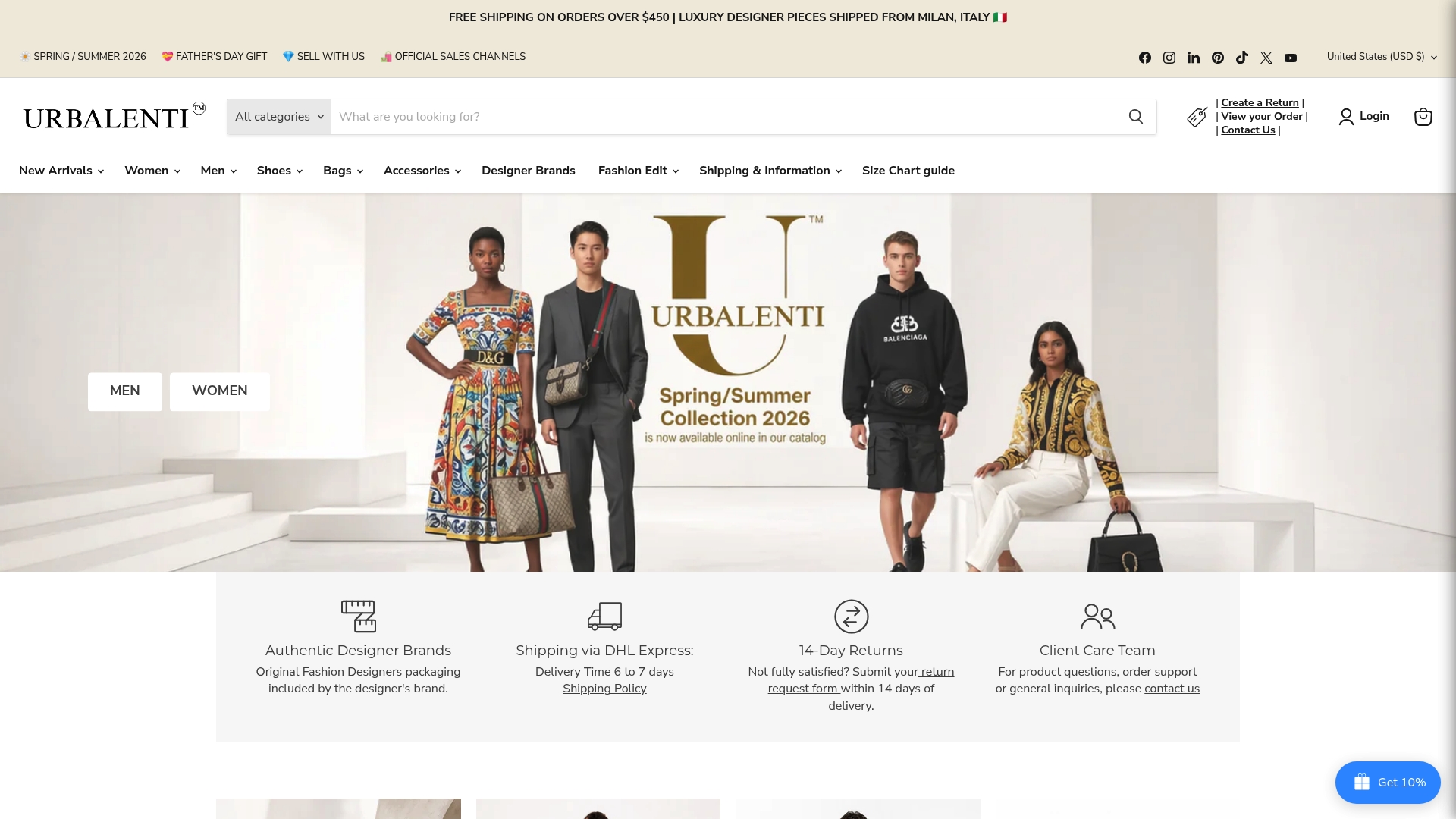
The current selection includes the MM6 Maison Margiela Squared Toe Sandals, a piece that exemplifies the architectural precision and conceptual clarity that defines New York’s curated luxury aesthetic. For footwear with a different register, the Dolce & Gabbana Portofino Sneakers and the Dolce & Gabbana 3.5 Handbag represent the kind of considered, narrative-driven selection that separates a curated edit from a product catalog. Every order is supported by dedicated personal service from selection to delivery.
Fashion curation is the practice of selecting and presenting clothing and accessories as cultural artifacts to tell a specific story or create a defined experience. It applies in museums, retail stores, and digital platforms alike.
Retail buying focuses on commercial performance and inventory management. Fashion curation prioritizes narrative coherence, cultural context, and audience experience, using pre-selection and staging to create meaning rather than simply stock a floor.
Ethics govern decisions about cultural provenance, representation, sustainability, and historical accuracy. NYU’s Curating Fashion program treats ethical reflection as a core professional skill, not a secondary concern.
AI agents, virtual try-ons, and augmented reality now function as curatorial tools. Designer Kate Barton’s 2026 NYFW collaboration with IBM and Fiducia AI demonstrated how multilingual AI can deliver personalized, narrative-driven fashion experiences at scale.
FIT’s museum, the Metropolitan Museum of Art’s Costume Institute, Bergdorf Goodman’s window installations, and appointment-based vintage shopping experiences curated by Vogue staffers all represent accessible entry points into New York’s fashion curation ecosystem.
Leave a comment